Book Review: Large Language Models (MIT Press Essential Knowledge Series)

It is undeniable that Large Language Models (LLMs) grew in popularity with the rise of ChatGPT in 2022. The technology seemed magical – ask it anything and it would respond as if one talks to a fellow human. Back then, I don't recall people calling ChatGPT an "LLM" (personally, I think the term became popular afterwards) but rather as simply a "chatbot." The latter term is more popular as the technology exists way before ChatGPT arose (dating back to the ELIZA program in the 1960s by Weizenbaum), albeit mostly rule-based (think of if-then-else programming). If chatbots existed before, what then is the fuss about ChatGPT? What makes it different from "chatbots" of before? And do we still need to understand how they work even though we already use the technology everyday?
In a nutshell, what powers ChatGPT (and other recent "chatbots") is a Large Language Model (LLM) capable of predicting the next token conditioned on the prompt given to it as well as to its training data. Technically, ChatGPT is the "frontend" (nice user interface that people see) while the LLM (for ChatGPT, it is GPT or Generative Pre-trained Transformer) is the "backend" (the engine behind). In reality though, there's still more to an LLM aside from being a next token predictor that turned out to be an everyday knowledge companion (as being a "next token predictor" surprisingly became good at other tasks such as text summarization and translation) — not just about the technology itself but also the implication it brings.
In this MIT Essential Knowledge Series book on Large Language Models authored by Stephan Raaijmakers, a professor of Communicative AI, a good, non-technical introduction to LLMs has been presented that is refreshing for those who already have the necessary technical knowledge. This small book covered the essentials about the topic — from the bare minimum working mechanism of an LLM (Transformer architecture, statistics, neural networks, vector databases, etc.) up to its societal implications. As someone who's studying AI, I already knew how LLMs work internally so for me, there's nothing really new to the technical details discussed. What I find interesting though are the broad implications of LLMs which I consider as eye opener.

First is with regards to creativity — the question of whether or not LLMs are creative. This is not directly answered in the book, but Prof. Raaijamakers laid out the possible resolution through technological, biological, and even psychological views. From a technical standpoint, LLM's creativity is discussed in the backdrop of "activators" and "generators". Simply put, the former refers to the internal "thoughts" (encoded as vectors) steering the model, while the latter is the engine that produces text or code. In this view, it can be said then that the output of an LLM is just mechanically generated (by generators) from the "activated" encoded vectors. From a psychological standpoint, the proposal of Margaret Boden, a renowned cognitive scientist, on two measures of creativity has been mentioned: P-creativity (psychological creativity) and H-creativity (historical creativity). The former refers to the "creativity of the entity responsible for producing a particular artifact" (we can interpret this as the "internal" creativity by the one producing a certain product) while the latter refers to the "creativity that is unfamiliar for everyone at a certain point in time." The output of an LLM can, in terms of creativity, fall on the latter measure of creativity, H-creativity, in that we are just "surprised" about its outputs, leading us to attribute "creativity" to it.
What I find very interesting though in the discussion of LLM's creativity is the biological or evolutionary view. In a grander scale, we can thought of nature as being "creative" in that eventually, different kinds of lifeforms emerge throughout time via different genetic means: selection, mutation, recombination, variation, etc. Prof. Raaijmakers creatively (pun intended) connected the concept of Darwinism to LLM's creativity in that LLMs, when injected with the data that is an output of that same LLM (think of "inbreeding"), diversity loses because, from a mathematical view, it will consume data with the same variance it already contains. Hence, combining everything, it can be implied that LLMs are not creative at all. However, Prof. Raaijmakers did not discount the fact the LLMs serve as good creative partners to spark creativity in humans which has led him to the next chapter about the practical opportunities brought upon by LLMs, leading to the societal risks post by this emerging technology.
It is undeniable how helpful LLMs are for a variety of tasks — coding, brainstorming, etc. (admittedly, I use Claude and Codex for a lot of coding tasks — they're really helpful). However, as someone who's been an everyday user of LLMs, I know for a fact that the outputs generated by an LLM is not 100% guaranteed to be true (although, to be fair, for me, its outputs are mostly correct) nor aligned with the user's intention all of the time. More than the correctness and alignment of LLMs, there are other issues presented by LLMs — some of which coincides with the issues posed by classical machine learning. Issues that emerge from LLMs include authorship (a highly contested issue), openness (the case that "open source" LLMs are not that that fully open after all), bias (LLMs ingest human bias inherently embedded in texts), adversarial usage (LLMs can be used to spread disinformation), confidentiality (personal queries can be used as additional training data by tech companies offering the LLM as a service), untamable data hunger, and energy consumption (the latter two are intertwined: untamable data hunger for training — along with inference — leads to huge energy consumption).
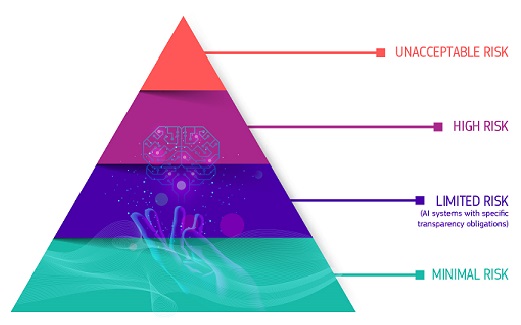
What can be done then with regards to issues pose by LLMs? Governance and regulation of LLMs are not yet settled, but the book provides a key reference: the EU AI Act. One of the key themes of the EU AI Act is that AI should be classified according to a risk model. At the bottom of the pyramid are those AI applications that has minimal or no risk; therefore, these are permitted without restrictions. Conversely, at the top of the pyramid lies prohibited AI applications which poses unacceptable risk. In this model, AI applications are evaluated according to the risk they pose: from minimal or no risk, medium risk, high risk, and unacceptable risk. Where does LLM fit? With the abovementioned issues arising from LLMs (bias, disinformation, etc.), it should put the technology higher on the risk pyramid; however, European AI companies (such as Mistral AI) lobbied for LLMs to be put in the medium-risk category, provided that their creators should open-source everything and provided that these models were not already banned or put into high risk category in the first place (again, "openness" is an issue in itself in that companies do not actually open-source everything). While I do acknowledge the risk that LLMs pose, I personally am not for blanket regulation on LLMs (or AI in general) as I believe that it harms AI development in the long run. In the case of Europe, the regulation perhaps makes a "safer" environment for its people in terms of AI use but this is at the expense of the development of AI industry in the continent: there is currently no large-scale AI industry (except what's produced by universities and a handful of AI companies) and they predominantly rely on large foreign companies for AI technology. In this light, there must be some middle ground solution — a healthy AI development environment while minimizing the risks pose by this emerging technology.
Overall, this small book has presented the basics of LLMs — from the mechanism of the technology itself up to its societal implications. For those who wanted to start understanding this key technology that is gradually dominating our everyday lives, this book is a good place to start especially for the non-technical audience. Going back to my question at the beginning, if do we still need to understand how they work even though we already use the technology everyday, my answer is: yes we do, as knowing how a technology works, even at a surface level, would allow us to become better users of the technology. This book serve its purpose on allowing us to become more adept users of LLMs. While I'm not a fan of LLMs myself (even though I study AI on a graduate level and everyday user of the technology), I find this book very interesting and helpful to better understand the implications that the technology brings. ###
Disclaimer: ChatGPT is not used to write this post. All shortcomings are mine.