Book Review: "AI Superpowers" by Kai-Fu Lee
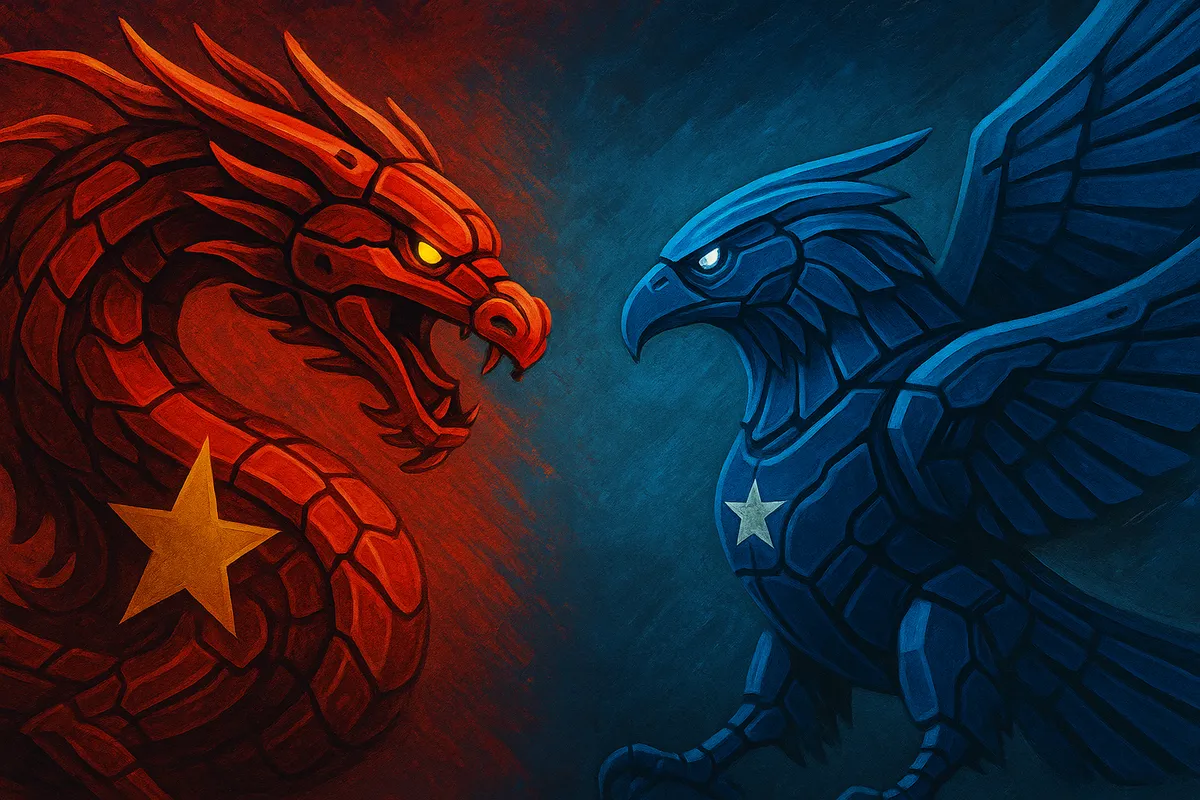
The first Artificial Intelligence (AI) book I read wasn't about algorithms, coding, or the "heroes of AI" — rather, it was about competition, culture, and compassion. Instead of focusing on the "basics of machine learning," it explores the geopolitics of AI between China and the United States (US), reminiscent — though on a smaller scale — of the Space Race between the US and the Soviet Union from the 1950s to the 1970s. AI Superpowers, authored by Dr. Kai-Fu Lee and published in 2018, is, for me, a refreshingly unconventional introduction to AI.
Despite my earlier remark, the book isn't really about geopolitics and "AI supremacy" per se; rather, it's about how today's AI technology is balanced out between China and the US (though the former is gaining a slight edge due to its primary resource — data), and how the overall development of AI would affect everyone around the world. Dr. Kai-Fu Lee elegantly weaved together a little bit of AI history of the two countries, a crash course on the disruption made by AI (particularly in the chapter "The Four Waves of AI"), and the possible future with AI.
Dr. Lee's experience in both US and China is evident in the book's chapters, making him one of the best people (perhaps aside from Andrew Ng and others who have a shared heritage, history, and experience in China and the US) to narrate the development of AI in the two countries. (For context, Dr. Lee is Taiwan-born but studied in the US; worked at Apple, Google, and Microsoft; went back to Beijing to head Google China; and now heading Sinovation Ventures funding Chinese startups.) His narrative of China's "gladiator" technological ecosystem in relation to AI and the internet is valuable as it is a story not usually known due to the "dominance" of Silicon Valley stories circulating around. Reading this part of the book made me understand China's technological culture, particularly answering the question of why there are a lot of "copycat" tech out there (to cut the long story, this is fine in China's culture because of its very competitive environment).
What stuck with me the most about this book is the discussion of the possible "crisis" brought upon by AI, as well as Dr. Lee's repeated calls on how to thrive as a human in the age of AI after facing his own mortality (he was diagnosed with lymphoma on 2013, but has long been in remission since). According to him, AI's imminent "threat" is not about AI going rogue or attaining superintelligence; rather, it's the threat of widespread job loss due to automation. To prepare for this worldwide crisis, he is suggesting for the creation of a compassionate and creative society to produce jobs requiring a human touch — something that would take AI too long to venture into. This perspective makes AI really close to us — rather than think about far-fetched (though possible, but perhaps in the distant future) existential scenarios about AI's threat, we have to worry more about the "down-to-Earth" adverse effects of AI.
Touching on the practical risks of AI, Dr. Lee took time to discuss those jobs that are at risk of being replaced by AI, both requiring cognitive and physical labor. To be fair, Dr. Lee also discussed what AI can't do, primarily those jobs that need social skills and creativity (e.g. social worker, criminal defense attorney), and those that require dexterity (e.g. hair stylist, physical therapist). As shown in Dr. Lee's "Risk of Replacement" plots (shown below), jobs belonging to the "Safe Zone" are those that AI can't do (for now) while those at the "Danger Zone" have a high risk of being replaced. This made me realize: jobs that are considered "simple" are in fact, harder to be replaced by AI since these jobs require, for instance, dexterity (the same can be said of those jobs requiring creativity and social skills). These insights give us a glimpse of how we can leverage being a human in the age of AI.
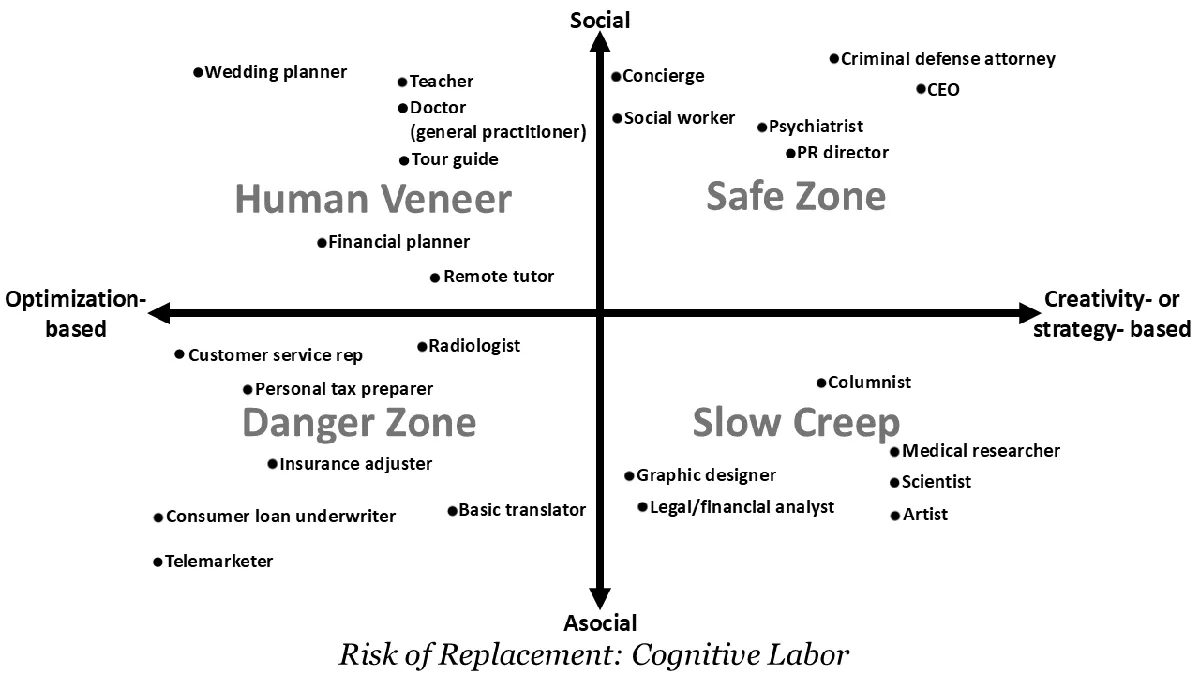 Recreated "Risk of Replacement" plot for Cognitive Labor. The plot shows jobs which AI can and can't do, primarily optimization- or creativity/strategy-based jobs requiring (or not requiring) social skills. Original plot is credited to the author.
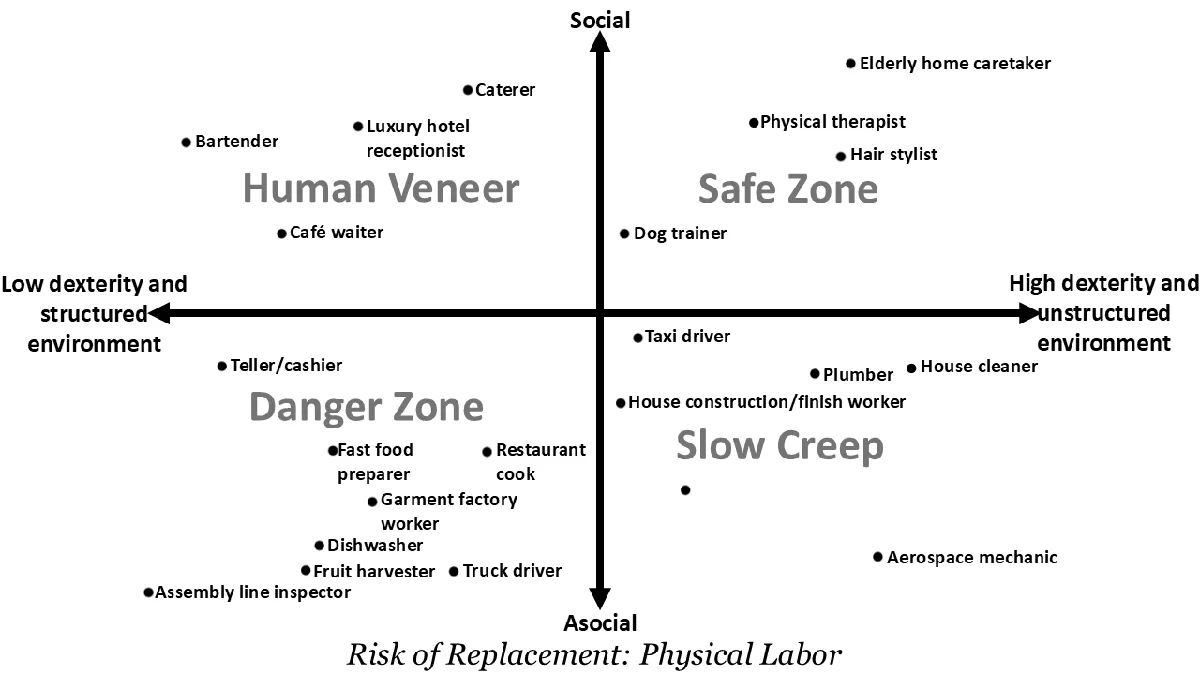 Recreated "Risk of Replacement" plot for Physical Labor. The plot shows which jobs AI can and can't do, especially for those that require a combination of social skills and dexterity. Original plot is credited to the author.
To combat these practical risks of AI, Dr. Lee suggested some solutions, among which is to establish good "social safety net" (such as implementing universal basic income) and upskilling programs for those who would be displaced by AI. (I agree to both.) This made me realize that we really need to think through how we can adapt to AI as it will affect anyone and everyone.
Dr. Lee concluded that it is up to human beings to decide what the future of AI should be. Although China and the US predominantly holds the "power" on AI, every country in the world also has a stake in it because AI's effect (as mentioned) would touch every inch of society. Ultimately, he mentioned to let machines be machines and humans be humans.
Building on that idea, what I found most valuable about AI Superpowers is how it reminds us that building AI isn't just a technical pursuit — it's truly a human one. Dr. Lee bridges the worlds of algorithms and empathy, urging us to consider how innovation can coexist with compassion. It's a perspective that every technologist, policymaker, and curious reader should engage with. ###